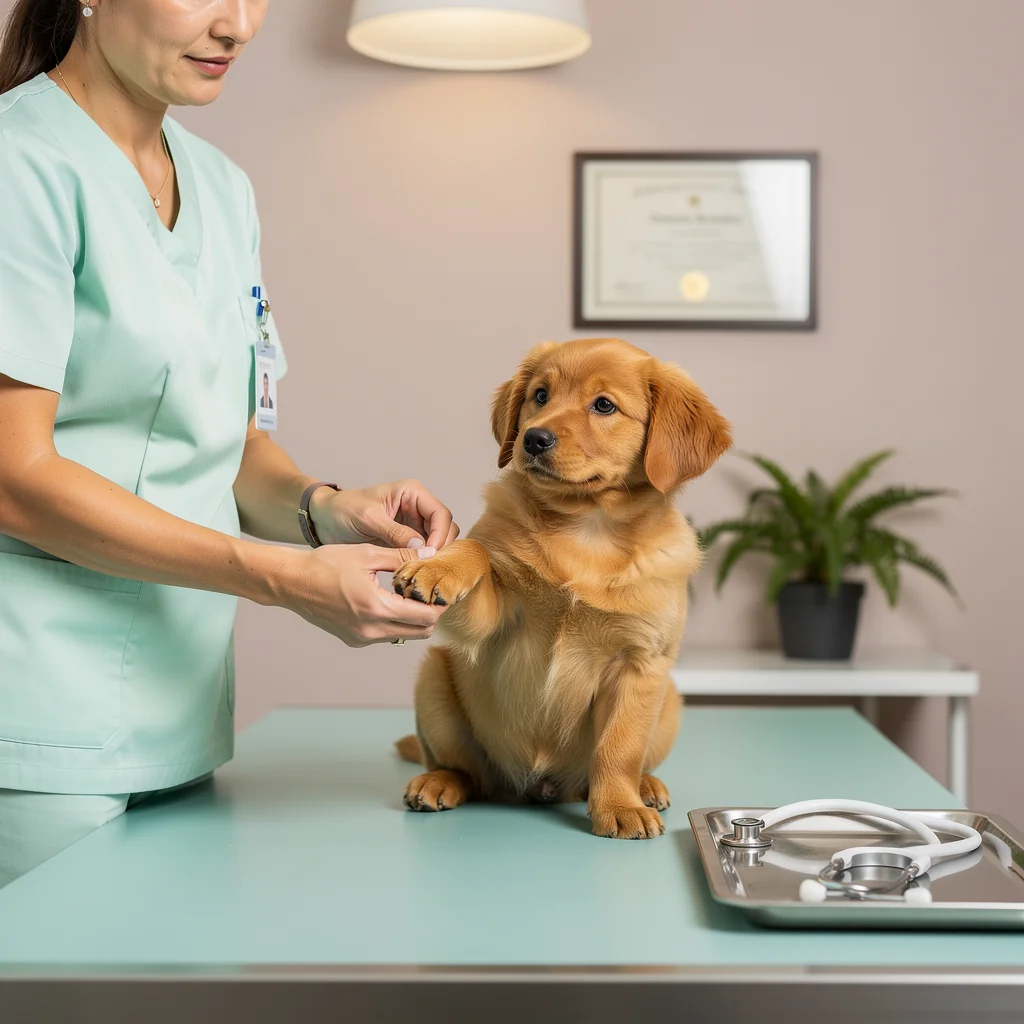
Most senior dog vet visits go the same way: fifteen minutes, a lot of questions you half remember the answers to, and three things you meant to ask that come back to you in the car park. The fix is a one page prep sheet you fill in the night before and hand over at the start of the appointment. Here it is, free.
Download the free Vet Visit Prep Sheet (PDF)
No email needed. Below is what goes on it, what to bring, and the five questions worth asking at every senior visit.
Why senior visits need a prep sheet
A young dog’s checkup is mostly the vet examining the dog. A senior dog’s checkup is mostly the vet asking you questions, because the things that matter at this age (appetite, thirst, stiffness, breathing at rest, bathroom habits, confusion at night) happen at home over weeks, not in the exam room. If you arrive with a month of notes, the vet can act on a trend. If you arrive with a feeling, the vet has to guess.
The prep sheet is built to pull that month onto one page. It takes ten minutes the night before, and it works best if you have been keeping the daily checklist and the medication chart, because most of the answers are already sitting on those.
What to bring
The sheet itself. The weight and breathing log, if you keep one. The medication chart, or a phone photo of it, so the vet can see missed doses without you having to remember. The symptom tracker if anything has been off. Every medication bottle, or a written list with exact doses, because “the small white one” is not a dose. A fresh stool sample if the clinic asked for one. And any photos or videos of the thing you are worried about: a limp, a cough, an episode at night. Thirty seconds of video shot at home is often more useful than a description, because the dog rarely performs the problem on the exam table.
Since the last visit
This is the short middle section of the sheet. Weight then and weight now (the vet will weigh the dog anyway, but your home number shows the trend between visits). Missed doses this month, counted from the chart. And three things that changed, taken from the monthly notes on the checklist. Small things count: sleeps in a different spot, hesitates at the back step, drinks the bowl dry by lunch. A change is the unit of information vets work with.
Five questions to ask at every senior visit
The sheet lists these with space to write the answer next to each. Is the current dose still right for the weight? Older dogs lose or gain weight slowly and doses are usually set by weight. Is there anything on the tracker that worries you? Let the vet read the pattern rather than telling them what you think it means. What should I watch for in the next few months? This is the single most useful question, because it tells you what to put on the blank lines of the checklist. Should any medication timing change to fit our routine? A dose at 7 am and 7 pm that keeps getting missed might be fine at 8 and 8. Is there anything I should stop giving? Supplements and treats accumulate, and vets rarely get asked this.
There are three blank rows for your own questions. Write them down before you leave the house. Nobody remembers them in the room.
Before you leave the clinic
The bottom of the sheet has a box titled “Plan we agreed on today” and two lines: next visit, and recheck or call by. Fill these in at the reception desk, not at home. If a medication changed, write the change on the notes page of your binder with the date, because in six weeks the question will be “when did we switch that?” and this is the only place the answer will exist.
After the visit
Update the medication chart the same day if anything changed. If the vet gave you something new to watch for, add it to the blank lines on the care checklist. If a follow up was mentioned, book it before you forget, even if it is months away. Then file the prep sheet with the others. A year of these sheets is a complete history of your dog’s senior years, in your own handwriting, that any new vet can read in five minutes.
Get the prep sheet
Download the free Vet Visit Prep Sheet (PDF)
The prep sheet is one of the thirteen pages in the Senior Dog Care Binder, alongside the medication chart, the care checklist, the symptom tracker, the weight and breathing log, the sitter handoff pages and the wallet emergency cards.
See what is in the Care Binder
Golden Years Dog Care provides organizational tools and checklists, not veterinary advice. Always follow your veterinarian’s instructions for your dog’s medications and conditions.