When your dog was younger, the yearly vet visit was easy to remember. Now your dog is getting older, and you may be wondering whether once a year is still enough, and what you should be asking when you get there.
This page pulls together what veterinary groups say about checkup frequency for older dogs, the questions worth bringing, and a simple way to stay on schedule. It is an organization guide, not veterinary advice. Your veterinarian will set the right schedule for your own dog.
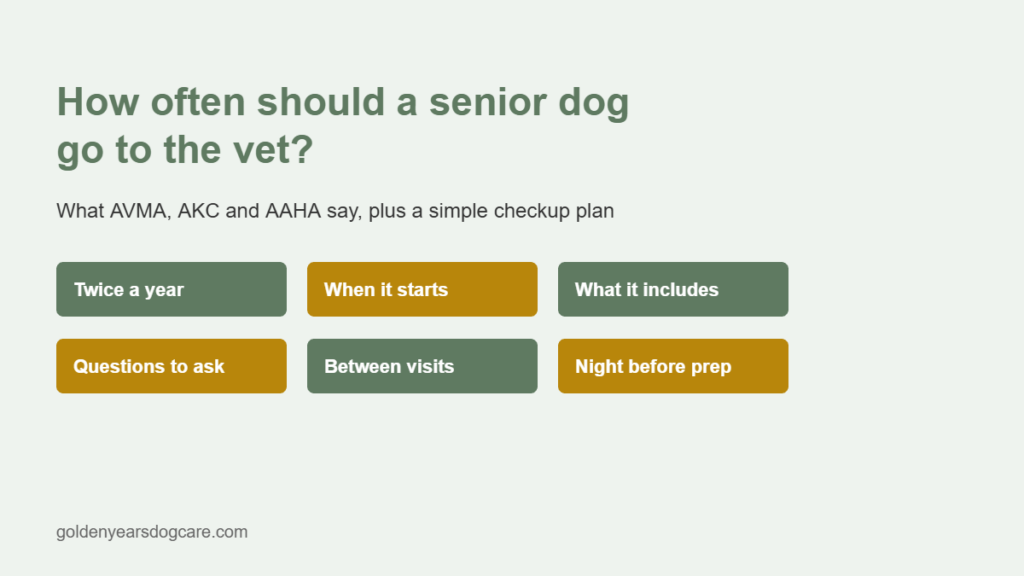
The short answer: at least twice a year
The American Veterinary Medical Association (AVMA) says senior pets should see a veterinarian twice a year or more, so that problems can be found early. The American Kennel Club (AKC) agrees that twice yearly wellness checks are helpful for senior dogs. The American Animal Hospital Association (AAHA) does not give a set number, but says senior pets need more frequent exams than younger pets.
Some dogs need more than two visits. AKC notes that dogs near the end of life often need to be seen more often than every six months. If your dog has an ongoing condition, your vet may suggest a different rhythm. Ask, and write down the answer.
When does the twice a year schedule start?
It depends on size. The AVMA describes a senior dog as one in roughly the last 25% of its breed’s expected life span, which on average is about:
- Small or toy breeds (under 20 pounds): 8 to 11 years
- Medium breeds (20 to 50 pounds): 8 to 10 years
- Large breeds (50 to 90 pounds): 8 to 9 years
- Giant breeds (over 90 pounds): 6 to 7 years
AKC’s Chief Veterinarian, Dr. Jerry Klein, makes the same point in the AKC article: a 7 year old toy breed and a 7 year old giant breed are not at the same stage of life, and giant breeds start twice yearly visits a couple of years earlier. If you are not sure whether your dog counts as a senior yet, see when is a dog a senior.
What a senior checkup may include
According to the AVMA, a senior exam is similar to a younger dog’s exam but more in depth. Depending on your dog, it may include:
- A full physical exam
- A look at teeth and dental care
- Bloodwork or other lab tests, if your vet recommends them
- A pain check, which AAHA lists as part of senior care
- A conversation about changes in health, routine or behavior at home
You do not need to know which tests your dog needs. That is your vet’s job. Your job is to arrive with good notes.
Questions to ask about checkup frequency
Bring these to your next visit, or ask them on the phone when you book:
- Do you consider my dog a senior now?
- How often would you like to see my dog from here on?
- Are there any routine tests you would like to do at each visit, or once a year?
- What changes at home should make me call before the next scheduled visit?
- Would you like me to track anything between visits, such as weight, appetite or water?
- Is there anything you would like me to bring next time, such as a medication list or notes?
For a longer list that covers medications, mobility, behavior and more, see our questions to ask the vet about a senior dog.
Do not wait for the next visit if something changes
A schedule is a minimum, not a rule to wait out. AKC advises not waiting for the next scheduled check if your dog seems less bright than usual, is eating less or is drinking more. When something new worries you, call your clinic and describe what you have seen. Dates and details make that call much easier.
A simple plan to stay on schedule
1. Book the next visit before you leave
Ask the front desk to book the next checkup before you walk out, and put it on your phone calendar with a reminder a week ahead.
2. Keep a short log between visits
AKC quotes Dr. Klein saying vets rely on an owner’s observation of what has happened and what is happening. A few lines a week are enough: walks, stairs, appetite, water, sleep and anything new. Our dog symptom tracker gives you a ready made layout, and our dog weight and breathing log helps if your vet has asked you to track either one. Not sure which changes are worth writing down? See changes in older dogs to tell your vet.
3. Update the medication list
Before each visit, check that every medication and supplement is written down exactly as it appears on the label. Our printable dog medication chart works well for this. Do not change anything on the list without talking to your vet.
4. Prepare the night before
Write down your questions, gather your notes and the medication list, and put them in one folder by the door. Our senior dog vet visit checklist walks you through it.
5. Write down what the vet said
In the car or as soon as you get home, write down the main points: any new instructions, test results to expect, and the date of the next visit. It is easy to forget details by the next day.
Keep it all in one place
The printable Senior Dog Care Binder ($15) keeps vet visit notes, medication pages, logs and caregiver handoff pages together, so each checkup starts with everything in hand. If you want one page to start with today, get the free emergency and medication card and keep it on the fridge.
Sources
- American Veterinary Medical Association (AVMA), “Caring for senior cats and dogs”: https://www.avma.org/resources-tools/pet-owners/petcare/senior-pets
- American Kennel Club (AKC), “How Often Should I Take My Dog to the Vet? A Puppy to Senior Dog Vet Timeline”: https://www.akc.org/expert-advice/health/how-often-should-i-take-my-dog-to-the-vet/
- American Animal Hospital Association (AAHA), “Senior status: Understanding your senior pet’s life stage”: https://www.aaha.org/resources/senior-status-understanding-your-senior-pets-life-stage/
Golden Years Dog Care provides organizational tools and checklists, not veterinary advice. Always follow your veterinarian’s instructions for your dog’s medications and conditions.